
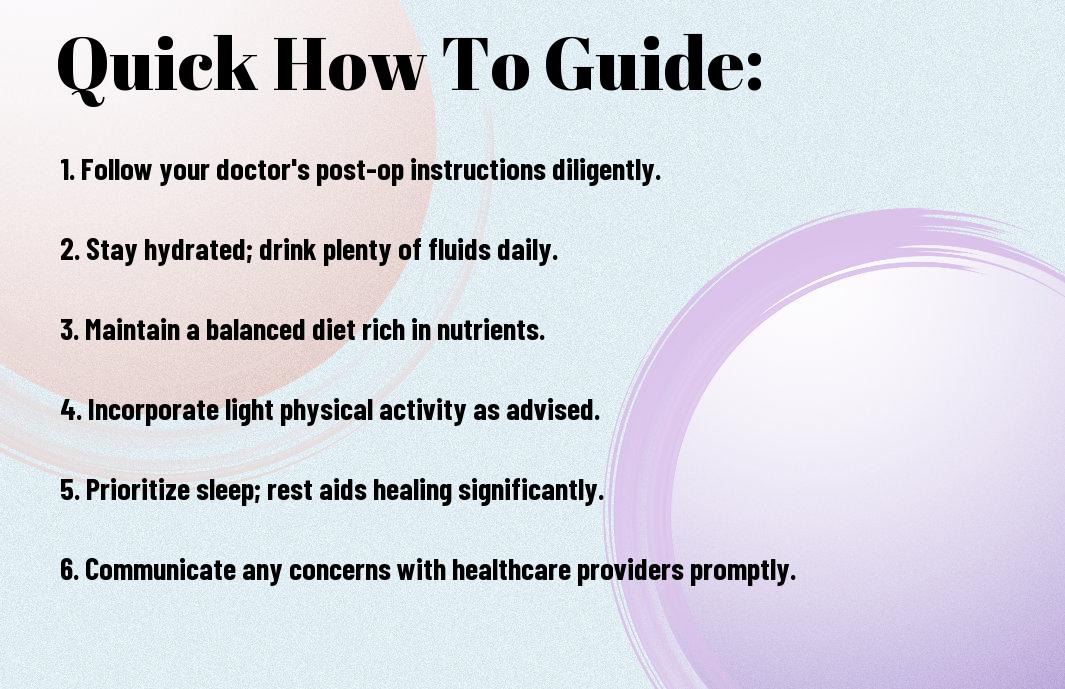
Over the recovery journey, ensuring your well-being can significantly impact your overall health. By following these helpful techniques, you can enhance your recovery experience and minimize potential complications. Prioritize rest, adhere to your healthcare provider’s instructions, and engage in gentle exercises as recommended. Focus on nutrition and hydration to support your body’s healing process, and don’t hesitate to seek help from family or professionals when needed. With the right approach, you can foster a positive recovery environment and promote faster healing.
Key Takeaways:
- Hydration: Ensuring adequate fluid intake aids in healing and prevents complications.
- Nutritional Support: A balanced diet rich in protein and vitamins is crucial for optimal recovery.
- Physical Activity: Light, guided exercises enhance mobility and strengthen muscles post-surgery.
- Pain Management: Effectively managing pain through prescribed medications and therapies contributes to a positive recovery experience.
- Emotional Well-being: Providing emotional support and engagement helps reduce anxiety and promotes recovery in seniors.
Understanding the Post-Surgery Recovery Process
To successfully navigate the recovery journey post-surgery, it’s vital to have a comprehensive understanding of the recovery process. As a senior, recognizing the various stages of recuperation will enable you to monitor progress and set your expectations accordingly. This knowledge not only reduces anxiety but also empowers you to actively participate in your healing. By identifying key recovery milestones, you can ensure that you are on the right track to regaining your strength and independence.
How-to Identify Recovery Stages
Process involves tracking your journey through distinct stages such as *acute recovery*, *preservation of functions*, and *full recovery*. Each stage showcases different physical and emotional changes, allowing you to understand what to anticipate and when to seek help. These milestones are important indicators of your overall recovery progress.
Factors Influencing Recovery Time
Process includes several factors that can significantly impact your recovery time. Understanding these factors enables you to tailor your approach to healing. Key elements include:
- Age
- General health
- Type of surgery
- Post-operative care
- Support system
Thou must remain aware that the combination of these factors will dictate the pace of your healing.
Additionally, the specifics of each factor can greatly vary among individuals. For instance, your *general health* prior to surgery can affect how your body responds to the procedure and heals afterward. Similarly, a strong *support system* can enhance emotional well-being and encourage adherence to recovery protocols. Thus, acknowledging these influences will help you navigate your recovery successfully.
- Physical activity
- Nutrition
- Medication adherence
- Psychological well-being
- Follow-up appointments
Thou should assess how each of these elements applies to your situation to foster an effective recovery experience.
Tips for Setting Realistic Recovery Goals
This segment aims to assist you in setting achievable goals throughout your recovery journey. Establishing realistic objectives ensures that you remain motivated and focused without overwhelming yourself. Consider these practical tips:
- Break down tasks
- Communicate with your healthcare provider
- Document your progress
- Adjust as necessary
- Celebrate small victories
Perceiving the significance of each goal will help you build momentum toward full recovery.
Even if your goals may need to evolve over time, flexibility is vital. Early steps, like simply getting out of bed independently, can be a victory worth celebrating. By identifying small, actionable tasks, and progressively building on them, you can foster a sense of accomplishment. This strategy not only enhances your commitment but also develops a positive mindset toward recovery.
- Stay patient
- Involve family and friends
- Manage stress
- Stay hydrated
- Seek professional advice
Perceiving recovery goals in a constructive light will pave the way for a smoother transition into your post-surgery life.
Preparing for Recovery at Home
Now that surgery is behind you, preparing for a smooth recovery at home is important. Your environment greatly influences your healing process, ensuring that you can focus on regaining your strength and health.
How-to Create a Recovery-Friendly Environment
Environment plays a vital role in your healing journey. Start by selecting a designated area where you can comfortably rest. Make sure this space is well-lit, quiet, and free from clutter. Access to importants, such as water, snacks, and entertainment, should be within arm’s reach to minimize your movements as you heal.
Tips for Organizing Essential Supplies
On the organizational front, having your important supplies within easy reach is important for seamless recovery. Focus on assembling a kit with necessary items like:
- Pill organizer for your medications
- Water bottle to stay hydrated
- Snacks that are easy to consume
- Comfortable clothing for easy access
- Entertainment options such as books or a tablet
Assume that having these items organized will facilitate your recovery experience significantly.
Plus, make sure to create an accessible layout where you typically spend your time. This encourages you to stay comfortable and reduces unnecessary strain on your body. Storage spaces like:
- Tables close to your resting area
- Chairs with armrests for support
- Clear pathways to avoid tripping
Assume that optimizing your layout will contribute positively to faster recovery.
Factors to Consider When Modifying Living Space
When thinking about adjustments to your living space, you need to consider the ease of movement. Ensure that areas like the bathroom and kitchen are both accessible and safe. You might want to install:
- Grab bars in the bathroom
- Non-slip mats in the shower
- Reachers or grabbers for hard-to-reach items
The adjustments you make can significantly affect your independence during recovery.
When assessing modifications, inspect your home for any hazards that could lead to falls or injuries. Identify and address aspects like:
- Poor lighting in hallways or stairs
- Loose rugs that may cause tripping
- Clutter that obstructs pathways
The focus should always be on enhancing safety and accessibility.
Consider that creating a supportive environment during recovery is imperative for your well-being. Prioritize comfort, safety, and easy access to your importants, allowing you to concentrate on your health.
Nutrition and Hydration Post-Surgery
Once again, proper nutrition and hydration are vital for your recovery after surgery. According to guidelines from How Seniors Can Prepare for Surgery and Heal Faster, you should focus on providing your body with the right nutrients to promote healing and support overall health.
How-to Plan a Balanced Diet for Recovery
Recovery is significantly enhanced by a balanced diet rich in vitamins, minerals, and protein. Start with lean meats, whole grains, fruits, and vegetables. Aim for a variety of colors on your plate to ensure you’re getting a range of nutrients. Additionally, consider speaking to a nutritionist about any dietary restrictions you may have.
Tips for Maintaining Proper Hydration
Assuming you remain hydrated, your body can perform imperative functions, aiding in recovery. Here are some key tips to maintain proper hydration:
- Drink at least 8 cups of water daily to support healing.
- Incorporate hydrating foods like fruits and vegetables into your diet, such as cucumbers and watermelon.
- Limit caffeine and alcohol, as they can dehydrate you.
Recognizing the signs of dehydration early will help you stay on track with your recovery.
Post-surgery, it’s imperative to focus on hydration because it aids in digestion, nutrient absorption, and toxin elimination. Here are some additional hydration tips:
- Set reminders to drink water regularly throughout the day.
- Infuse water with herbs or fruits to make it more appealing.
- Keep a bottle of water near you as a visual reminder to drink.
Recognizing your hydration needs will keep your body functioning optimally during recovery.
Factors Affecting Nutritional Needs in Seniors
Recovery is influenced by multiple factors affecting your nutritional needs. These factors may include your age, health status, and any medications you are taking. Diet adjustments may be necessary to meet your body’s specific demands post-surgery.
- Your metabolism may slow down with age, affecting nutrient needs.
- Chronic conditions may necessitate special diets.
- Some medications may alter your appetite or nutrient absorption.
Recognizing these factors will help you tailor your diet for optimal recovery.
Plan your meals accordingly by focusing on nutrient-dense foods and being aware of factors like changes in appetite, metabolism, and health conditions. By prioritizing a diet rich in protein, fiber, and necessary vitamins, you can enhance your recovery experience. Consider consulting a healthcare professional or a dietitian for personalized advice, enabling you to navigate your post-surgical recovery successfully.
Physical Activity and Exercise
For seniors recovering from surgery, incorporating a safe and effective physical activity plan is vital to enhance recovery and restore strength. Engaging in appropriate exercises not only aids in physical recovery but also promotes mental well-being and encourages mobility.
How-to Safely Resume Physical Activity
Now that you are ready to return to physical activity, start slowly. Begin with light stretches and gentle movements to assess your body’s response. Gradually increase intensity as tolerated, ensuring you maintain communication with your healthcare provider regarding your progress.
Tips for Gentle Exercises to Aid Recovery
Some effective ways to ease back into exercise include:
- Start with walking for short distances.
- Incorporate low-impact stretching routines.
- Utilize resistance bands for strength building.
- Practice chair exercises for stability.
Any of these gentle exercises can significantly help in your recovery journey when performed consistently.
Howto choose exercises that suit your recovery needs is vital. Focus on movements that don’t strain your muscles or joints. Additionally, incorporating balance and flexibility exercises will enhance your overall stability and health. Some examples include:
- Gentle yoga sessions.
- Pilates for core stability.
- Light water aerobics to reduce impact.
- Walking on flat surfaces.
Any choice of gentle exercise can support your recovery effectively, allowing your body to gradually regain strength.
Factors to Monitor During Post-Surgery Exercise
Monitor your body’s response throughout the recovery process. It’s important to pay attention to how you feel during and after exercises. Keep an eye out for any signs of discomfort, fatigue, or limitations, and adjust your activity level accordingly.
- Watch for pain indicators.
- Track your energy levels.
- Notice any swelling in your limbs.
- Be alert to signs of dizziness.
Perceiving these changes can guide you in adapting your exercise routine to better suit your body’s current state.
Exercises you engage in should be continually assessed for their effects on your recovery. If you notice any negative changes in your condition, refrain from strenuous activities and consult your healthcare provider immediately. Further, be aware of:
- Repeating pain thresholds.
- Unusual fatigue levels.
- Signs of improvement in strength.
- Mobility enhancement potential.
Perceiving these factors will help ensure your recovery remains on track, allowing you to achieve optimal results safely.
Pain Management Strategies
After your surgery, managing pain effectively is vital to ensure a smooth recovery. Pain can be a considerable hurdle that affects your mobility, mood, and overall healing process. Implementing tailored pain management strategies will help you regain comfort and independence.
How-to Effectively Manage Pain Post-Surgery
Pain management starts with understanding your pain levels and communicating openly with your healthcare team. Regularly assess how your pain fluctuates and share these details with your doctor to optimize your treatment plan.
Tips for Utilizing Medication Wisely
Effectively using medications post-surgery can significantly influence your recovery experience. Consider the following tips for optimal results:
- Maintain a regular schedule for your medications.
- Consider using non-pharmaceutical methods alongside medication, such as ice or heat.
- Avoid skipping doses or self-medicating without guidance from your healthcare provider.
After following these practices, you may find that your pain levels are easier to control.
Pain management also involves understanding the various types of medications available. Prescription drugs, over-the-counter options, and alternative remedies can play a role. Always engage in discussion with your healthcare team to make informed choices about medications that fit your needs.
- Assess the medications prescribed to you.
- Discuss possible side effects and how to mitigate them.
- Inquire about natural or alternative treatments that may complement your recovery.
After gathering this information, you will be better equipped to engage with your pain management plan.
Factors Influencing Pain Perception in Seniors
Pain perception in seniors may differ from younger individuals due to various factors. Your medical history, emotional state, and even age-related changes can affect how your body processes pain signals.
- Consider your pain history and how it may impact your current recovery.
- Recognize the role of anxiety or depression in enhancing pain perception.
- Acknowledge how age-related physiological changes can alter pain thresholds.
Knowing these factors can help you work more collaboratively with your healthcare team for a more tailored recovery experience.
Tips for managing pain perception involve a multi-faceted approach. Engage in open conversations about your unique circumstances and how they might alter your pain experience. Employ coping strategies that may include relaxation techniques, mindfulness practices, and gentle physical activity.
- Monitor your emotional health alongside your physical symptoms.
- Participate in physical therapy to boost recovery.
- Utilize support networks for emotional and psychological assistance.
Knowing how these aspects intertwine can enhance your overall approach to managing pain during your recovery.
Mental and Emotional Well-being
Unlike physical recovery, which may be more straightforward, maintaining your mental and emotional well-being post-surgery can be a complex journey. It’s vital to prioritize your mental health, as it significantly affects your overall recovery process. Prioritizing emotional support, engaging in activities that bring joy, and fostering connections can enhance your healing experience.
How-to Maintain a Positive Mindset During Recovery
Some effective techniques to cultivate a positive mindset during your recovery include practicing gratitude, visualizing your healing process, and setting achievable goals. Engage in uplifting activities like listening to music or reading, as they can foster positivity and enhance your mood.
Tips for Managing Anxiety and Depression
Depression and anxiety are common feelings during recovery, and managing them is vital for your well-being. Consider incorporating these strategies into your routine:
- Mindfulness meditation
- Regular physical activity
- Support groups
- Professional counseling
After integrating these practices, you may find it easier to navigate your emotions and maintain a healthier outlook.
A holistic approach can significantly aid in managing anxiety and depression. Engaging in activities like journaling or practicing relaxation techniques can provide an outlet for your feelings. Additionally, maintaining a routine that includes time for social interaction and hobbies will help foster a sense of connection and joy. Consider these methods:
- Creative expression
- Outdoor activities
- Balanced nutrition
- Adequate sleep
After implementing these strategies, you will be setting yourself up for a more balanced emotional state.
Factors That Impact Mental Health in Seniors
Seniors often face numerous factors that can impact their mental health, including chronic illnesses, medication side effects, and social isolation. It’s vital to identify these influences, as addressing them effectively can lead to improved emotional well-being.
- Chronic health conditions
- Social support systems
- Life transitions
- Mental health history
Recognizing these factors empowers you to seek assistance and address any underlying issues that may affect your mental health.
Impact on your mental health can stem from various challenges that you might face as a senior. For example, a lack of social interactions can lead to loneliness and exacerbate feelings of anxiety or depression. Being open to establishing new connections or maintaining old friendships can not only relieve emotional burdens but also enhance your recovery. Consider these aspects:
- Financial stress
- Physical limitations
- Environmental factors
- Access to healthcare
Recognizing these influences allows you to take proactive measures, ultimately leading to a healthier, more fulfilling life post-surgery.
Follow-Up Care and Support Systems
Despite the challenges of surgery, effective follow-up care and solid support systems can greatly enhance your recovery experience. Ensuring that you have a well-structured plan in place for your post-surgery journey is imperative to achieve the best outcomes.
How-to Schedule and Prepare for Follow-Up Appointments
While scheduling your follow-up appointments, make a list of the dates and times that work best for you. Keep a personal calendar where you can also note any symptoms or concerns you want to discuss with your doctor. This preparation helps ensure a comprehensive review of your recovery progress.
Tips for Engaging Family and Friends in Recovery
You can significantly improve your recovery process by involving your family and friends. Engaging your loved ones not only offers emotional support but also assists in practical tasks that promote your healing. Consider these tips:
- Communicate your needs and how they can help
- Set up a schedule for visits or assistance
- Encourage positive interactions that lift your spirits
- Ask for specific support based on your recovery stage
Any involvement from family and friends can contribute significantly to your emotional and physical well-being.
Factors That Support Long-Term Recovery Success
One important aspect of long-term recovery is identifying the factors that will support your health journey. To optimize your recovery, focus on the following:
- Adhering to post-operative care instructions
- Establishing a healthy routine with balanced nutrition and exercise
- Maintaining regular communication with healthcare providers
- Building a strong support network of friends and family
Knowing how to engage and leverage these factors can pave the way for a successful recovery experience.
Family involvement plays a vital role in your recovery journey. The presence of your loved ones can provide much-needed encouragement and accountability. Keep these points in mind:
- Discuss your progress with family members regularly
- Encourage family members to learn about your recovery process
- Involve them in activities that aid your rehabilitation
- Ensure open lines of communication about your needs
Knowing that you have a support system can make a significant difference in your recovery journey.
Conclusion
Conclusively, ensuring optimal post-surgery recovery for seniors involves a combination of careful planning, adherence to medical advice, and lifestyle adjustments. You should prioritize rest and nutrition, engage in gentle physical activity as advised, and seek social support from family or friends. Staying informed about your medication and follow-up appointments is also vital. By actively participating in your recovery process and utilizing these helpful techniques, you can significantly enhance your healing journey and return to your daily activities with confidence.
FAQ
Q: What should seniors prioritize in their diet after surgery?
A: After surgery, it is important for seniors to focus on a balanced diet that includes plenty of protein, vitamins, and minerals. Foods rich in protein, such as lean meats, dairy, and legumes, can promote healing. Additionally, incorporating fruits and vegetables can provide imperative nutrients that support recovery. Staying hydrated is also key; seniors should aim to drink adequate water throughout the day to facilitate bodily functions and recovery processes.
Q: How can seniors manage pain effectively following surgery?
A: Pain management is vital for a smoother recovery. Seniors should discuss pain management strategies with their healthcare provider, which may include prescribed medications or over-the-counter options. Non-pharmacological approaches such as relaxation techniques, guided imagery, or light therapy can also be beneficial. It’s important to address pain early and consistently to help maintain mobility and improve overall recovery outcomes.
Q: What types of physical activity are recommended for seniors recovering from surgery?
A: After surgery, engaging in light physical activity, like walking or gentle stretching, is often recommended to promote circulation and prevent stiffness. However, it is imperative for seniors to consult their healthcare provider before starting any exercise regimen. Physical therapy may be suggested to guide the recovery process with tailored exercises that consider the individual’s condition and surgery type. Maintaining a gradual return to normal activities is key to successful recovery.
Q: How can family and caregivers support seniors’ rehabilitation process?
A: Family and caregivers play a critical role in supporting seniors post-surgery. Providing emotional support and companionship can alleviate feelings of isolation and encourage adherence to recovery plans. Assisting with daily tasks such as meal preparation, medication management, and follow-up appointments can help seniors focus on their recovery. Creating a safe and comfortable living environment free of hazards enhances their ability to engage in recovery activities.
Q: What indicators should seniors look for that may suggest complications during recovery?
A: Seniors should be vigilant for signs of complications during their recovery, including increased pain that does not improve with medication, swelling or redness around the surgical site, fever, or unusual discharge. If there are symptoms of confusion, shortness of breath, or chest pain, seeking immediate medical attention is imperative. Regular follow-ups with healthcare providers can help monitor recovery and identify any potential issues early on.



Leave a Reply