
Recovery can be a challenging journey, but selecting the right walker can greatly enhance your mobility and safety. A walker not only provides stability but also fosters independence during your rehabilitation process. In this guide, you will learn how to assess your needs, consider the various types of walkers available, and identify key features that will support your recovery goals. Prioritizing your safety and comfort with the right walker is vital in ensuring a smooth transition back to your daily activities.
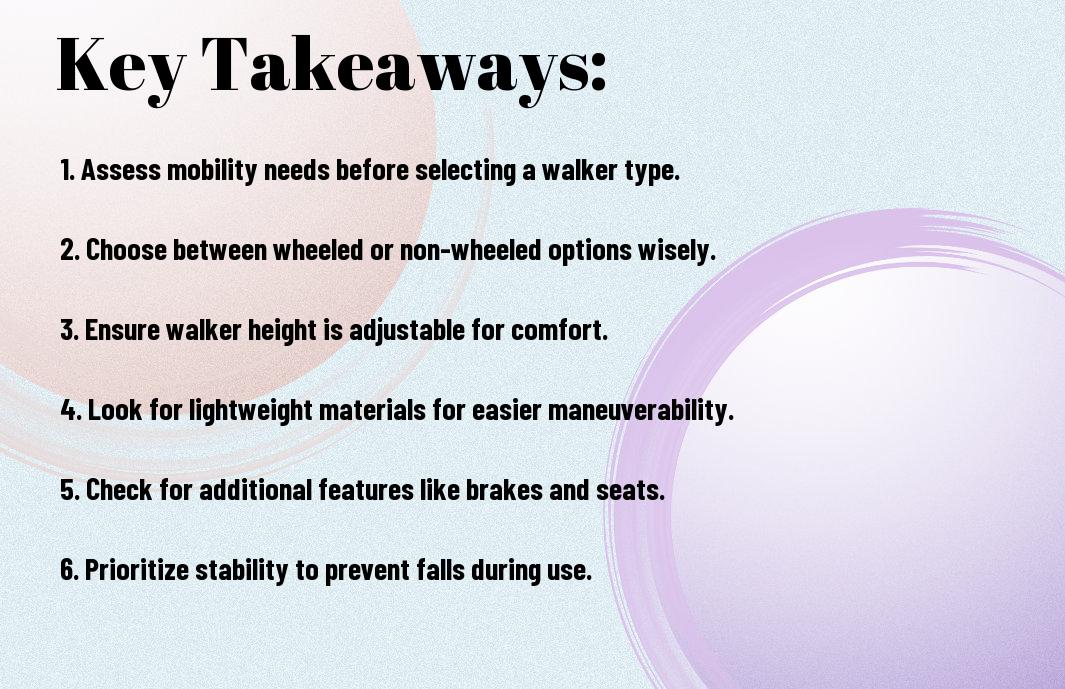
Key Takeaways:
- Type of Walker: Different types of walkers are available, including standard walkers, rolling walkers, and knee walkers, each serving specific needs and mobility levels.
- Weight Capacity: Ensure the walker can support the user’s weight; check the manufacturer’s specifications to guarantee safety and stability.
- Height Adjustability: Opt for walkers that can be adjusted in height to match the user’s individual needs for comfort and effective mobility.
- Ease of Use: Select walkers that are lightweight and easy to maneuver, allowing seniors to navigate their surroundings without difficulty.
- Safety Features: Look for crucial safety features such as non-slip grips, brakes, and foldable designs for both functionality and security during use.
Understanding Walkers
Your understanding of walkers can greatly enhance safety and independence during recovery. With a variety of options available, choosing the right one can make a significant difference in mobility.
Types of Walkers
Your choice of walker should align with your needs. There are several types available:
| Type | Description |
|---|---|
| Standard Walker | Offers maximum stability with four legs, no wheels. |
| Two-Wheeled Walker | Features wheels on the front for easier movement. |
| Four-Wheeled Walker | Provides the ultimate in mobility with four wheels. |
| Rollator | A type of four-wheeled walker with a seat for resting. |
| Post-Op Walker | Designed specifically for recovery after surgery. |
After exploring these options, you’ll be better equipped to choose a walker that suits your recovery journey.
Key Features to Consider
Your walker should not only be functional but also tailored to your specific needs. Consider these features:
- Height Adjustment
- Weight Capacity
- Wheels or No Wheels
- Hand Grip Type
- Portability
Knowing what features are vital can significantly improve your mobility experience.
Features like height adjustment ensure that the walker fits your stature, while the weight capacity is important for safety. Hand grip type can affect comfort and control, whereas portability allows for easy transport. A decision that factors these elements can greatly enhance your confidence as you recover.
- Storage Options
- Durability
- Type of Brakes
- Additional Accessories
- Ease of Use
Knowing these additional features can lead to a more satisfactory choice in your walker.
Safety Features
Around every walker, safety should always be a top priority. Look for features that promote stability and protect you from falls.
Due to your recovery process, using a walker equipped with non-slip grips, braking systems, and reflective elements can significantly enhance safety. Opt for walkers with good stability and a lightweight design for easier maneuverability. Incorporating safety features helps build your confidence and facilitates a secure environment.
Assessing Individual Needs
Keep in mind that assessing your unique needs is important in selecting a walker that will best support your recovery journey.
Mobility Requirements
Among the first considerations should be your mobility requirements. Are you able to bear weight on your legs, or do you require a walker that provides more stability and support? Determining the level of assistance you need will guide your choice.
Physical Limitations
Around your physical limitations, consider any existing medical conditions that may affect your mobility. Issues such as arthritis, muscle weakness, or balance problems can significantly influence the type of walker you require.
Requirements for physical limitations involve understanding how these conditions impact your daily activities. For instance, if you experience severe arthritis, opting for a walker with a built-in seat can provide rest during your walks. Additionally, if you have limited upper body strength, a walker with easy-to-grip handles is important for enhancing your stability and reducing fatigue.
Living Environment
Below, you should evaluate your living environment to ensure it complements your mobility equipment. Consider the types of surfaces you will be navigating, whether indoors or outdoors.
Indeed, your living environment plays a significant role in your mobility choices. For instance, if your home has narrow hallways or steep stairs, a walker that is too bulky may be unsuitable. Assessing the layout and accessibility of your space will ensure you choose a walker that safely fits your everyday needs.
Choosing the Right Walker
Not every walker is suitable for every individual. Selecting the right walker involves understanding your unique needs and circumstances, ensuring that you find a device that complements your recovery process. A well-chosen walker can significantly enhance your safety and independence as you regain your mobility.
Consulting Healthcare Professionals
After undergoing an assessment by a healthcare professional, you will gain insight into the specific type of walker that suits your condition. These professionals can recommend walkers based on your mobility level, strength, and any existing medical conditions, ensuring that you choose a device that supports your rehabilitation effectively.
Trial and Evaluation
At the heart of choosing the right walker is the trial and evaluation process. Taking the time to test out different types of walkers can help you understand which one feels most comfortable and stable. It’s important to pay attention to how each walker supports your weight and encourages natural movement.
Choosing the right walker means trying out several models, as each walker offers distinct features. You should consider aspects such as weight capacity, height adjustability, and the ease of maneuverability. During your trials, pay attention to any discomfort or difficulty you encounter, and don’t hesitate to seek assistance in making a decision. Finding the right fit is imperative for your comfort and safety.
Budget Considerations
Considerations for budgeting should include not only the cost of the walker but also any additional features that may enhance your mobility experience. While it may be tempting to go for the cheapest option, investing in a quality walker will yield better results in terms of durability and safety.
Budgeting for your walker involves evaluating your finances and reflecting on the long-term benefits that a well-made device provides. Investing slightly more in a walker that offers enhanced stability, support, or built-in features can result in a significantly improved recovery process, reducing the risk of falls and promoting your independence. Don’t underestimate the value of quality when it comes to your mobility aids.
Training and Usage
Now that you have chosen the right walker for your needs, it’s important to understand the proper training and usage techniques to ensure your safety and recovery. For detailed guidance, refer to How to Use a Walker Correctly. This will help you navigate your environment confidently and effectively, reducing the risk of falls.
Proper Walker Usage Techniques
An effective way to use a walker includes positioning it correctly and maintaining your balance. Always grip the walker with both hands by the designated handles, and avoid leaning forward too much. Ensure that the walker is at an appropriate height, allowing your elbows to be slightly bent when holding on. Proper technique can significantly enhance your stability and safety.
Exercises to Improve Confidence and Strength
Along with walker training, engaging in specific exercises can boost your confidence and enhance muscle strength. Focus on low-impact activities, such as seated leg lifts or gentle marching in place, to build your leg and core strength. Establishing a consistent exercise routine can make transitioning into using your walker more manageable.
Walker exercises not only build strength but also enhance your overall confidence as you recover. Incorporate balance exercises—like standing on one foot or practicing heel-to-toe walking—into your routine to improve stability and coordination. Consistency will lead you to feel more secure while using your walker, ultimately aiding in a faster recovery.
Communicating with Caregivers and Family
Exercises like sharing your feelings about using the walker with caregivers or family can make a positive difference in your recovery journey. Open communication ensures that your needs are met and that those around you understand any concerns you may have with your mobility.
Consequently, having regular discussions about your progress can help caregivers and family members adjust their support according to your evolving needs. Be vocal about any challenges you encounter or improvements you notice, as this feedback can encourage a collaborative effort in your recovery. Strong communication will create a supportive environment, making your rehabilitation smoother and more effective.
Maintenance and Care
Unlike any other mobility device, a walker requires consistent maintenance and care to ensure your safety and independence during recovery. Proper upkeep not only prolongs the life of the walker but also enhances your overall experience and confidence as you begin to move around more freely.
Regular Inspections
The importance of conducting regular inspections on your walker cannot be understated. You should routinely check for worn out wheels, loose screws, or any signs of damage. Staying proactive with these inspections helps identify potential hazards before they can lead to accidents.
Cleaning and Upkeep
Against the common inclination to overlook cleaning, it is vital that you keep your walker spotless. Regular cleaning minimizes the buildup of dirt and grime that can affect performance and hygiene.
Considering the materials your walker is made of, ensure you use appropriate cleaning agents to avoid damage. Pay special attention to the wheels and grips, as these components are pivotal in your stability and comfort. Always adhere to your manufacturer’s guidelines for both cleaning and maintenance. This helps you maintain a safe, efficient walking aid and promotes longevity, positively impacting your recovery process.
Resources and Support
Once again, navigating the world of walkers can be overwhelming, but there are numerous resources and support systems available to assist you in your recovery journey.
Assistance Programs and Grants
Across the country, various assistance programs and grants are designed to help seniors afford mobility aids, including walkers. These programs often cover a portion of the costs associated with purchasing or renting a walker, allowing you to focus more on your recovery rather than your budget.
Community Resources
To further support your recovery, local community resources can be invaluable. These may include organizations that provide equipment lending libraries, transportation services, and physical therapy programs tailored to seniors. By connecting with community resources, you can access the equipment and services you need while engaging with others undergoing similar experiences.
Community organizations often serve as a hub for information and support. They typically host events, workshops, and activities that promote health and wellness, encouraging you to take an active role in your recovery. Additionally, these organizations can direct you to additional resources, forming a network of support to assist you in reclaiming your mobility and confidence.
Online Support Groups and Forums
Before submerging into your recovery, you can benefit from exploring online support groups and forums. These platforms connect you with others facing similar challenges, allowing for shared experiences and advice on walker usage and overall recovery strategies.
In addition, online support groups foster a sense of community that transcends geographical limitations. Engaging in discussions will not only provide you with valuable insights but also offer emotional support. Whether you are seeking tips on walker maintenance or sharing your personal journey, interacting with others can be a powerful tool in enhancing your recovery and creating new friendships along the way.
Final Words
Considering all points, selecting the right walker for your recovery is important for ensuring your safety and independence. Evaluate your specific needs, consult with healthcare professionals, and consider the various types of walkers available. Whether you prefer a standard walker, a rolling walker, or one with specialized features, making an informed choice will enhance your mobility. Prioritize comfort, stability, and usability in your selection process to aid your recovery and improve your quality of life.
FAQ
Q: What types of walkers are available for seniors recovering from surgery or injury?
A: There are several types of walkers suitable for seniors, including standard walkers, wheeled walkers (also known as rollators), knee scooters, and folding walkers. Standard walkers provide the most stability with a sturdy frame, while wheeled walkers offer enhanced mobility with wheels on the front legs. Knee scooters are designed for those recovering from lower limb injuries and allow users to rest their knee while propelling themselves with their other foot. Folding walkers can be convenient for travel and storage due to their lightweight and collapsible design.
Q: How can I determine the right walker height for a senior?
A: To find the correct walker height for a senior, have them stand upright with their arms relaxed at their sides. When they hold the walker, their elbows should be slightly bent (approximately 15-30 degrees). The height should allow the wrists to line up with the handgrips of the walker. Many walkers are adjustable, so it’s important to properly fit the walker to the individual user’s height to ensure comfort and optimal support.
Q: What should I look for in terms of safety features when choosing a walker?
A: When deciding on a walker, consider features such as non-slip rubber grips, a sturdy frame made from durable materials, brakes on wheeled models, and lightweight construction for easy maneuverability. Some walkers come with built-in seats, which can provide a resting option during longer outings. Additionally, reflectors or bright colors can increase visibility, which is beneficial during outdoor use.
Q: Can a walker assist with balance during recovery?
A: Yes, walkers are designed to provide additional stability and support, making them effective tools for seniors who are recovering and may have balance issues. Using a walker allows individuals to have a secure grip and a wider base of support, helping to prevent falls. It’s important to encourage the user to practice walking with the walker under supervision if they are uncertain about their balance.
Q: How can I encourage a senior to use a walker during their recovery period?
A: Encourage the use of a walker by emphasizing its benefits, such as increased mobility and independence. Involve them in the selection process to make them feel more comfortable using the walker. You can also set small goals for mobility, such as walking short distances together, and celebrate accomplishments to boost their confidence. Additionally, ensure that the walker is readily accessible, and offer assistance if they need help maneuvering, particularly at the start of their recovery journey.




Leave a Reply